Wednesday, August 12, 2009

OrangeFlowerBlueWall


Could Chance have brought this flower to a better place to die?


Drifting in the wind to lay beside my complement...


Tuesday, August 11, 2009

New Piece Sent To Auction In Vermont

The name of this piece is:

Clouds Over Tuscany, 2003


My tears dream of evaporating into a cloud so they can travel across the world and fall down upon your cheek some rainy day in Tuscany.


I made it last weekend for an auction that my friend Christy is hosting in Vermont. She's starting up a new artist studio collective and the auction is a fundraiser.
I consider the piece to be a sculpture, the frame being part of it.
I made the drawings in 2003 while I was studying in Tuscany... they are Italian clouds...
The important thing is the relationship between the image and the text. The space between them, and the intimacy. And this within the ordered system of the Arrangement and the Frame.

Found Composition

Monday, August 10, 2009

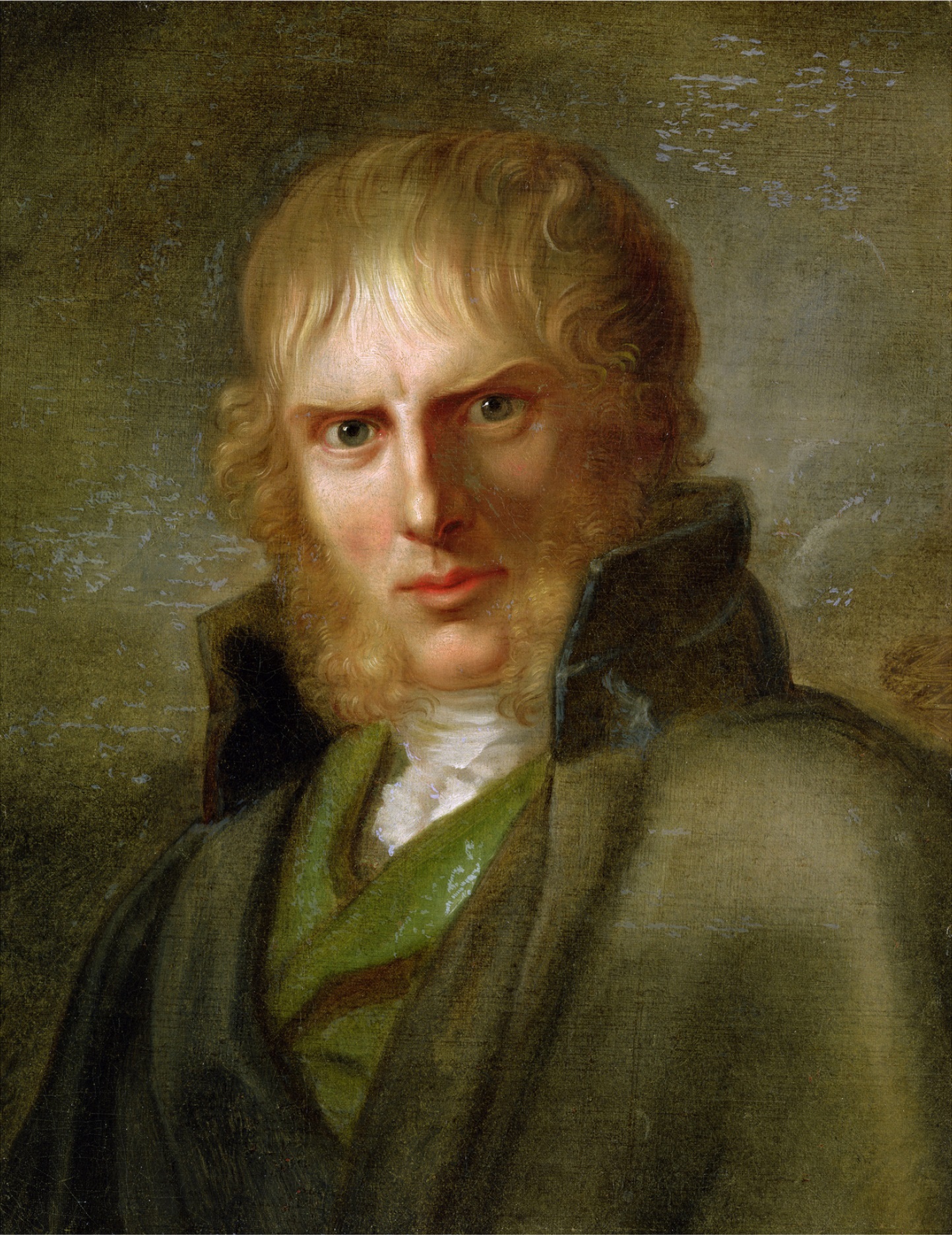
Caspar David Friedrich

September 5, 1774 - May 7, 1840

One of the central figures of German Romanticism


Seashore with Shipwreck by Moonlight
(1825-1830)


The Sea Of Ice
(1823-1824)


Portrait of Caspar David Friedrich, c. 1810-20
by Gerhard von Kügelgen (1772-1820)


This Dude was intense.

I recently discovered the painting The Sea Of Ice, which I've also seen translated as Shipwreck (Polar Sea).

The image was a part of my daily visual landscape for about a week before I realized it was a painting. My glance had been reading it as a contemporary installation, some kind of set. A dramatic, other-worldly scene. -- As a painting it is a very different animal, and as a painting created in the 1820's... it blows my mind. The sensibility seems so contemporary: The solidity, geometry, broken bits, jagged edges.

Analogy


"Analogia, or ana/logos, signifies 'according to due ratio' and 'according to the same kind of way.' Analogon, then is the proportion or similarity that exists between two or more apparently dissimilar things: like the tensile harmony that Parmenides maintained fitted together fire and earth, or Empedocles believed conjoined love and hate, or Anaxogoras thought tied the visible to the invisible realm. Both ancient and modern, its figures of reconciliation expressed how self could relate to others, how human beings might exist in reciprocity with society or in harmony with nature.
With Plato, Aristotle, the Neoplatonists, Aquinas, Kant, Mill, Nietzsche, Heidegger, and the late Wittgenstein, this elastic knot of unity assumed a wider epistemological meaning than numerical equidistance and logical symmetry. It emerged as a form of dialectics attempting to bridge the seen and the unseen, the known and the unknown. Proportionality, or the like and reciprocal relation between two proportions, is distinct from mere identity, the illusion of full adequacy in the explication of one term by means of another."

-Barbara Maria Stafford, Visual Analogy, p8

Elective Affinities


by Johann Wolfgang von Goethe

"In the novella Elective Affinities (1809) Goethe brilliantly exposed and critiqued the negative dialectics undergirding Novalis's Naturphilosophie. Stretching Robert Hooke's notion of the 'sociability' existing between the opposite poles of a magnet, Goethe created a scientific romance to meditate on the mysteries of why and how people are drawn toward one another. He also expanded Newton's theory of gravitational attraction to include chemical and electrical phenomena, correlating these with the lodestone-and-iron-filing patterns of human behavior. Inspired by the fact that mixing certain chemical compounds resulted in their astonishing exchange of 'partners,' Goethe developed an extended material metaphor to capture the emotional switches occurring among a quartet of lovers. The Captain, one of the story's four characters, thus explained how close and strong, remote and weak connections—just as in an experimentally induced precipitation—really became interesting 'only when they bring about separations.' The chemist, then, was primarily and 'artist in separating.' To which the horrified Charlotte vainly protested: 'Uniting is a greater and more deserving art.'"

- Barbara Maria Stafford, Visual Analogy, p19

Wednesday, July 8, 2009

Sunday, July 5, 2009

Saturday, June 20, 2009

Wednesday, June 17, 2009

Tuesday, June 16, 2009

Obama Trading Cards


I can't decide whether I think these are worrisome or awesome.
All this reading I've been doing lately about images... how we are encouraged to live in a world of shadows, consuming; acting in a commercial/image realm and equating that with having an actual affect on 'real' life...
And then there is Ranciere's notion of the 'distribuition of the sensible' which proposes that by changing our images we are indeed changing the world: A change in what is visible catalyzes a change in what is imaginable and acceptable, this allows for new social configurations and dynamics.

What does it mean to commemorate (co-memorate—as in: creating memories together) history commercially? Topps has marketed other historic series' such as President Kennedy cards and 'Man on the Moon' cards in the 1960's. 
In this way one can 'own' a part of history. But don't we already own a part of this history? Don't we own it because we participated in it? Does owning it as an image, as something outside of ourselves, eclipse our sense of personal involvement in it from experience?
 
Whatever Obama trading cards mean, I have to admit, I like 'em and I kinda want some...

get your own at Topps

Monday, June 15, 2009

The Devil's Hangout


Bliss, Daddy Hickman said, you keep asking me to take you even though I keep telling you that folks don't like to see preachers hanging around a place they think of as one of the Devil's hangouts. All right, so now I'm going to take you so you can see for yourself, and you'll see that it's just like the world—full of sinners and with a few believers, a few good folks and a heap of mixed-up and bad ones. Yes, and beyond the fun of sitting there looking at the marvelous happenings in the dark, there's all the same old snares and delusions we have to sidestep every day right out here in the bright sunlight. Because you see, Bliss, it's not so much a matter of where you are as what you see...
Yes, sir, I said.
No, don't agree too quick, Bliss; wait until you understand. But like old Luke says, "The light of the body is the eye," so you want to be careful that the light that your eye lets into you isn't the light of darkness. I mean you always have to be sure that you see what you're looking at. 
I nodded my head, watching his eyes. I could see him studying the Word as he talked.
That's right, he said, many times you will have to preach goodness out of badness, little boy. Yes, and hope out of hopelessness. God made the world and gave it a chance, and when it's bad we have to remember that it's still his plan for it to be redeemed through the striving of a few good women and men. So come on, we're going to walk down there and take us a good look. We're going to do it in style too, with some popcorn and peanuts and some Cracker Jacks and candy bars. You might as well get some idea of what you will have to fight against, because I don't believe you can really lead folks if you never have to face up to any of the temptations they face. Christ had to put on the flesh, Bliss: you understand? And I was a sinner man too.
Yes, sir.
But wait here a second, Bliss—
He looked deep into me and I felt a tremor. Sir? I said.
His eyes became sad as he hesitated, then:
Now don't think this is going to become a habit, Bliss. I know you're going to like being in there looking in the dark, even though you have to climb up those filthy pissy stairs to get there. Oh yes, you're going to enjoy looking at the pictures just about like I used to enjoy being up there on the bandstand playing music for folks to enjoy themselves to back there in my olden days. Yes, you're going to like looking at the pictures, most likely you're going to be bug-eyed with the excitement; but I'm telling you right now that it's one of those pleasures we preachers have to leave to other folks. And I'll tell you why, little preacher: Too much looking at those pictures is going to have a lot of folks raising a crop of confusion. The show hasn't been here but a short while but I can see it coming already. Because folks are getting themselves mixed up with those shadows spread out against the wall, with people that are no more than some smoke drifting up from hell or pouring out of a bottle. so they lose touch with who they're supposed to be, Bliss. They forget to be what the Book tells them they were meant to be—and that's God's own image. The preacher's job, his main job, Bliss, is to help folks find themselves and to keep reminding them to remember who they are. So you see, those pictures can go against our purpose. If they look at those shows too often they'll get all mixed up with so many of those shadows that they'll lose their way. They won't know who they are is what I mean. So you see, if we start going to the picture-show all the time, folks will think we're going to the devil and backsliding from what we preach. We have to set them an example, Bliss; so we're going in there for the first and last time—

-from Juneteenth, by Ralph Ellison

A capitalist society needs...

A capitalist society requires a culture based on images. It needs to furnish vast amounts of entertainment in order to stimulate buying and anesthetize the injuries of class, race, and sex. And it needs to gather unlimited resources, increase productivity, keep order, make war, give jobs to bureaucrats. The camera's twin capacities, to subjectivize reality and to objectify it, ideally serve these needs and strengthen them. Cameras define reality in the two ways essential to the workings of an advanced industrial society: as a spectacle (for masses) and as an object of surveillance (for rulers). The change is replaced by a change in images. The freedom to consume a plurality of images and goods is equated with freedom itself. The narrowing of free political choice to free economic consumption requires the unlimited production and consumption of images.

-Susan Sontag, On Photography, p178-179

Friday, June 12, 2009

Found Art Installation

Fenced-off Lot
Potrero Ave. & Mariposa
Clearly intentional,
Note the aerosol shadow that the tree throws- down the wall, across
the cement...
Did the same mind join the tree to the pipe?
I don't think so
These are different sensibilities
One is changing, connecting, inserting, disturbing, lifting
The other is commenting, noticing, tracing, projecting
One is the sun, active
The other the shadow, receptive

Construction

Bryant, between 24th & 25th

I've been really drawn to construction sites lately.
The colors, I love the bright orange,
but also the equipment,
I have the awe of a 6-year-old boy all of a sudden
And the digging and breaking and the working together
The changing of the city
The changing of a street
These crews come in and they change our physical world!
These orange colored crews

Thursday, June 11, 2009

A Sign


I just like the way this looks
The contrast of the two signs
The one, nicely typed and formatted
The other, official in a different way, functional
One, professional
The other, working class
Two different signs from two different worlds placed side by side
equal in their necessariness

Wednesday, June 10, 2009

Monday, June 8, 2009

...nothing that should not be seen...


"According to one attitude, there is nothing that should not be seen; according to the other, there is nothing that should not be recorded. Cameras implement an aesthetic view of reality by being a machine-toy that extends to everyone the possibility of making disinterested judgments about importance, interest, beauty. ("That would make a good picture.") Cameras implement the instrumental view of reality by gathering information that enables us to make a more accurate and much quicker response to whatever is going on. The response may of course be either repressive or benevolent: military reconnaissance photographs help snuff out lives, X-rays help save them."

- On Photography - p176

Excerpts from 'On Photography'


by Susan Sontag
published in 1973


"Through being photographed, something becomes part of a system of information, fitted into schemes of classification and storage which range from the crudely chronological order of snapshot sequences pasted in family alums to the dogged accumulations and meticulous filing needed for photography's uses in weather forecasting, astronomy, microbiology, geology, police work, medical training and diagnosis, military reconnaissance, and art history. Photographs do more than redefine the stuff of ordinary experience (people, things, events, whatever we see—albeit differently, often inattentively— with natural vision) and add vast amounts of material that we never see at all. Reality as such is redefined—as an item for exhibition, as a record for scrutiny, as a target for surveillance. The photographic exploration and duplication of the world fragments continuities and feeds the pieces into an interminable dossier, thereby providing possibilities of control that could not even be dreamed of under the earlier system of recording information: writing."
p156

"While many people in the non-industrialized countries still feel apprehensive when being photographed, divining it to be some kind of trespass, an act of disrespect, a sublimated looting of personality or the culture, people in industrialized countries seek to have their photographs taken—feel that they are images, and are made real by photographs."
p161

"To possess the world in the form of images is, precisely, to reexperience the unreality and remoteness of the real."
p164

Tuesday, June 2, 2009

Zen in the Art of Photography

"Cartier-Bresson has likened himself to a Zen archer (see my post on 'Zen in the Art of Archery'), who must become the target so as to be able to hit it; 'thinking should be done
beforehand and afterwards,' he says, 'never while actually taking a
photograph.'"

-'On Photography' by Susan Sontag

Sunday, May 31, 2009

Found Cut-out

Found Sculpture

The Living Roof

At The California Academy of Sciences

"Stop and smell the wildflowers during a visit to the Academy's living roof, a 2.5-acre expanse of native California plants. The museum's most iconic green building feature, the roof provides superior insulation, prevents stormwater runoff, reduces the urban heat island effect, and creates a new habitat for native birds, butterflies, and other local wildlife."


My uncle and other companions at the Academy noticed that the living roof had an uncanny resemblance to another fantastic agricultural landscape.... Teletubby Island. And I have to say, it is an eerie topographical synonym.


This is not a beisa oryx

Academy of sciences, San Francisco

Found Time-Based Piece

Melting Candy, outside the De Young

Tuesday, May 26, 2009

Monday, May 25, 2009

Sunday, May 24, 2009

Overheard: Liberty/Valencia

A dude on the phone, while walking with his girlfriend...

"Hey, I have a question for you about unicorns... Are they gender
specific?..."

Gregory Webster

The Pocket Books

2/5 of the band

Let's Whisper

Antarctica Takes It!

The Apple Orchard

Land Of Ill Earthquakes

Now...
Acoustic music picnic in Dolores Park
Part of SF Pop Fest
There's a really nice spirit here...

Saturday, May 23, 2009

Found Fortune


....says...'A Distant Relative Will Phone You Soon'....

...the way Rice felt while listening.


"But Rice, on the spot, gave Johnson carte blanche to hire the Alberses—and immediately. He made the decision not because he knew anything of them or because Black Mountain was so desperate that he had to pick names out of the hat. Rather, it was the way Johnson had looked when he talked about Albers—and the way Rice felt while listening. 'If you ever meet anybody who has seen a great teacher in action,' Rice explained years later, 'something happens as soon as you mention his name. Something happens to the person that's talking to the person who's talking about him. You see a vision.' It was one of the shrewdest intuitions, perhaps the key decision in Black Mountain's early years."

Friday, May 22, 2009

Found Frame

/found drawing

click on the image for a better look at what is framed

Thursday, May 21, 2009

Monday, May 18, 2009

Found Sculpture, Cat Sleeping in the Sun


slack licorice, soft dusty, flop cuddled
dreaming
in a meadow somewhere, sun warming, squinting
blue ceiling, deep, endless
veils and pillows, soft and swaddle
soft earth, whispering low
caravan of friends trafficking
endlessness, forever, and infinity

Sunday, May 17, 2009

Found Sculpture


Orange Peel : hiding in the grass
Traces of a conscious unveiling : one piece
Traces of time : petrification

Wednesday, May 13, 2009

Thursday, May 7, 2009

Come One! Come All! (Right Now!)

The California College of the Arts:
MFA Exhibition

Opening Reception: Thursday, May 7, 6–9 p.m.

Info: 415.551.9271
Free and open to the public
Running May 7–16, 10 am–7:30 pm


Come mingle with talented, up and coming, artists like Conrad(ical) Ruiz.
(pictured at left)...


... and Mysterious, Allstar Curators like the fabulous Jens Hoffmann.
(pictured at left)

Tuesday, May 5, 2009

Artist Talk Tonight!!! 7pm


Abraham Cruzvillegas will be here... and so will his parents! Who are
the subject of his recent work for the Passengers exhibition @ the
Wattis Gallery (CCA - 1111 8th st. - San Francisco).

'Abraham Cruzvillegas was born in Mexico City in 1968. He lives and
works in Mexico City and Paris.'
- Wattis Literature

Che Bel Fiore!

Walking along on a gray rainy day and then WHAM! Color hits you upside
the head!

Monday, May 4, 2009

The why...

... It's best not to leave your bike locked up on the street forever...

Because if it doesn't get stripped for parts... It's bound to end up
as somebody's public art project.